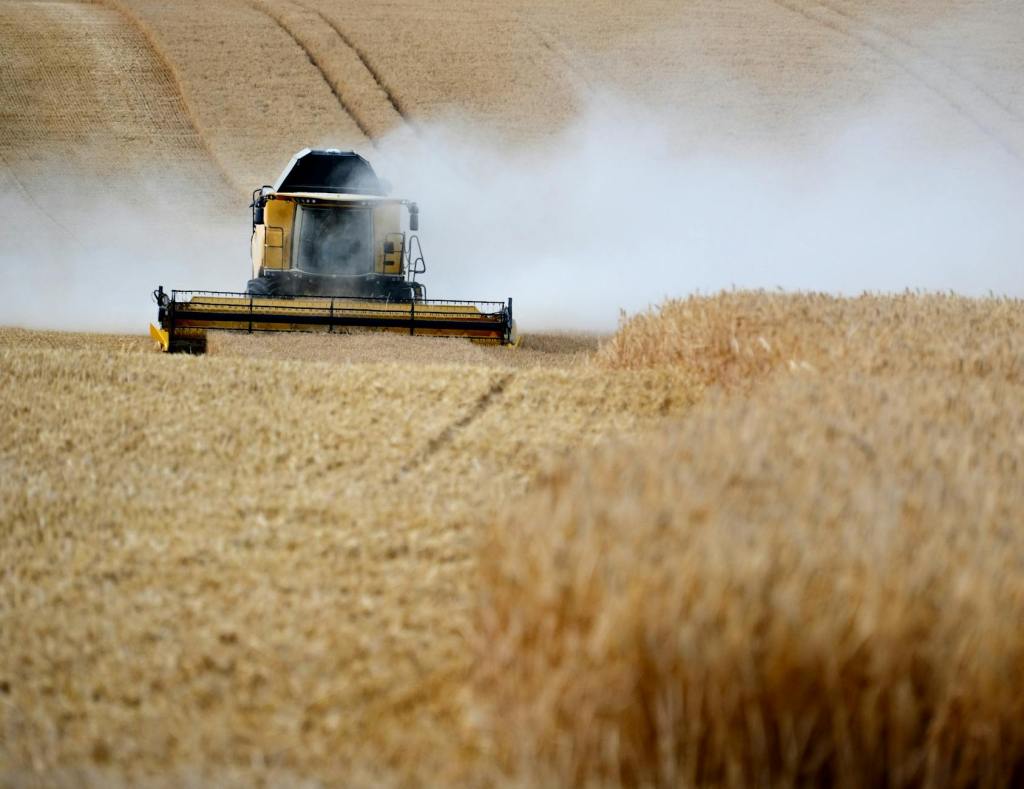
Agriculture has always been a bet on the weather. Today’s farmer isn’t just betting on rainfall. They’re navigating volatile commodity markets, rising input costs, global trade shifts, reinsurance pressure, labor shortages, and weather events that didn’t have household names a decade ago.
This is specialty insurance at its most complex. From the sugar beet fields of North Dakota to the corn and cattle country of Nebraska to the citrus groves in Florida to soybean farms in Iowa, agriculture insurance isn’t just another commercial line. It’s a universe of federal programs, private products, changing deductibles, and increasingly sophisticated risk strategy.
For independent agents working in this space, education—not price—is the product.
The Federal Side: Crop Insurance
The first thing many people misunderstand? Crop insurance and farm insurance are not the same thing. Multi-peril crop insurance (MPCI) operates through the U.S. Department of Agriculture’s Risk Management Agency (RMA). It is federally structured, federally priced, and deeply technical.
Rich Sager, of Richard Sager Crop Insurance in Devils Lake, North Dakota, describes it this way: “We are considered a crop agency only, which means we write multi-peril crop insurance administered through USDA. Every crop has a policy. They have a ranking order. And on top of that, there’s probably a dozen or so handbooks—some over a thousand pages—that explain those policies.”
If two farmers have identical production histories and elections, their premium will be the same no matter which agent writes it. That means service is everything. “The price is the same,” Sager says. “So how you keep customers is 100% education and service.”
Participation rates are extremely high across the Great Plains and Midwest including North Dakota, South Dakota, Minnesota, Iowa, Kansas, Texas. But crop insurance also plays a major role in specialty crop regions, even if adoption varies. “There are shortfalls when you get to the West Coast states with all the different crops. They have trouble buying coverage for some of the specialty crops,” Sager explains.
Everywhere, the principle is the same: crop insurance is a financial stabilizer, not a profit guarantee. “Very seldom will a crop insurance loss generate a payment that covers all your variable costs and all the grower’s fixed costs,” Sager says. “It’s just not going to be that kind of coverage in most cases.”
“Since each producer will have different financial risk, coverage can be purchased to meet the specific risks of that producer in the event of an adverse insurable event occurs. That decision about coverage is made by the producer at sales closing,” Sager explains.
Machinery, Bins, and Big Exposures
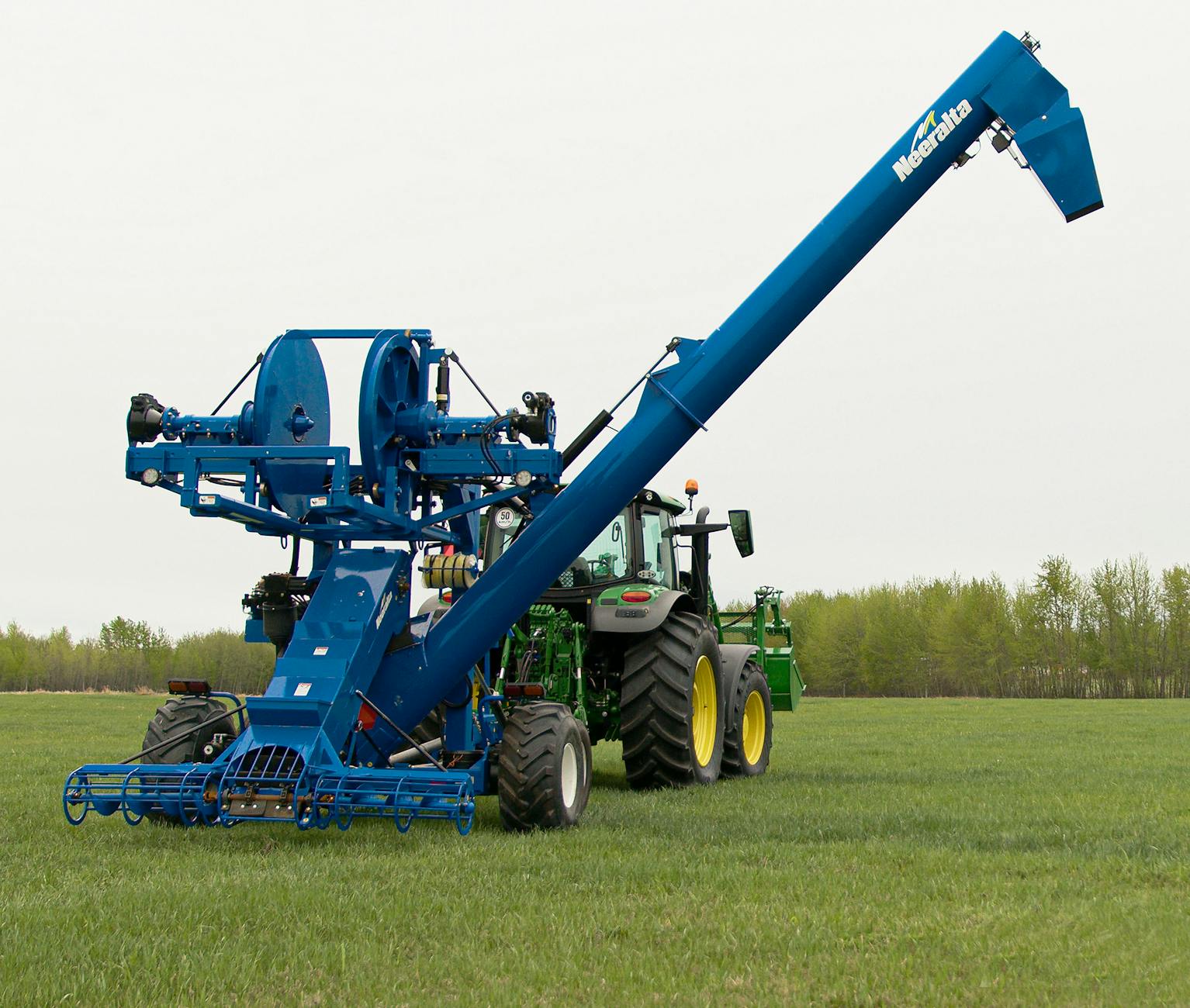
Separate from crop coverage is the property & casualty side: machinery, grain bins, livestock buildings, liability, and farm dwellings. This market behaves more like standard P&C, but with rural intensity. A single bin site can represent $2 million in structures. Combines and tractors routinely exceed six figures. Wind and hail losses can level an operation overnight.
Farmers have always dealt with drought and hail. What’s changing is intensity and unpredictability. In North Dakota last summer, a derecho—sustained 100+ mph winds for hours—flattened million-dollar bin sites and turned fields black. Many growers had never experienced that scale of event. Unlike a short gust, sustained wind at hurricane force destroys infrastructure in ways few structures are engineered to withstand.
The aftermath changed conversations. “When a producer sees a $2 million facility reduced to scrap metal, the value of annual coverage reviews suddenly becomes obvious,” explains Shane Larck of Ihry Insurance in Hope, North Dakota.
That type of event isn’t unique to North Dakota. Iowa experienced a catastrophic derecho in 2020. Gulf Coast states battle hurricanes. Western states face wildfire risk. The Plains face hail and wind. California faces drought. These types of events test both coverage and deductible structure. For example, across the Midwest, carriers are increasingly pushing wind and hail deductibles to $5,000 or $10,000 minimums, often a downstream reaction to global reinsurance markets.
Weather volatility is a constant refrain across regions. Sager has seen the shift firsthand. “We definitely have longer falls than we probably did 40 years ago. We may not get this annually, but we did freeze on September 5 this year, which hurt soybeans,” he explains.
The unpredictability has changed the client conversation. “Mother Nature is so volatile, but these changes have given us the opportunity to educate,” Larck says. “We talk about things like what will happen in this scenario or that scenario.”
Tight Margins, Higher Stakes
The economic backdrop makes risk management even more urgent. Commodity prices are soft relative to input costs. Fertilizer, seed genetics, equipment, and labor expenses remain elevated. For many Midwest producers, projected cash flow margins are razor-thin or negative.
This may mean that insurance isn’t just protection against catastrophe but the difference between solvency and restructuring. Insurance itself is also expensive and complex. Private hail coverage may layer on top of federal crop policies. Supplemental coverage may address price gaps. Deductibles must be weighed against cash reserves. Coverage decisions are locked in weeks before planting, long before anyone knows what the growing season will bring.
In addition, farming demographics are shifting nationwide. In Seward, Nebraska, Mark Suhr of Suhr & Lichty Insurance sees consolidation reshaping the industry. “It’s very hard to get into the farming world because it’s so costly for the land, so costly for the machinery. It’s almost impossible without some sort of assistance,” he said.
The result is fewer farms, larger operations. “Our farms are getting fewer and fewer, but the ones that are in existence are getting larger and larger,” explains Larck. That consolidation magnifies risk. A single operation may represent tens of thousands of acres and millions in equipment and structures.
Mastering the Complexity
Agriculture insurance isn’t a plug-and-play vertical. It’s technical. It’s seasonal. And it’s capital-intensive. Crop agents must master federal handbooks thousands of pages deep. Rules change annually. Coverage decisions hinge on production histories and evolving regulatory updates. On the P&C side, agents navigate changing deductibles and valuation challenges for high-cost rural assets. Independent agents in this space are focused on expertise and relationships. “Our primary role is education,” explains Sager.
In small towns and large farming communities, trust drives retention. “It’s very important to be regularly reviewing the growers’ businesses. Building replacement cost and equipment valuations change. Relationships are critical.”
Agriculture insurance is a specialty line where:
• Pricing is often fixed.
• Deductibles are rising.
• Margins are shrinking.
• Weather is intensifying.
• Farms are consolidating.
• And education is the competitive advantage.
For independent agents who commit to mastering it, agriculture isn’t just another book of business. It’s a long game played in seasons, and every year, the bet starts again.


 PIA Connection Online
Leave a comment