
Consumers increasingly expect the same convenience from their insurance providers that they receive from banks, retailers, airlines, and healthcare providers. They want to access information, start transactions, and receive assistance when it’s convenient for them—not necessarily when the agency is open.
At the same time, most agencies have no interest in becoming 24-hour call centers. The challenge is finding the right balance between customer accessibility and operational reality.
Whether you’re evaluating customer portals, online forms, voice AI, or scheduling tools, here are some questions to consider before investing in after-hours service technology.
1. What Are Customers Actually Trying to Do After Hours?
Not every request requires a live conversation. Many customers simply want to:
- Access an ID card
- Make a payment
- Review policy documents
- Check claim status
- Request a certificate
- Report a claim
- Start a policy change
Before evaluating technology, agencies should identify the most common requests they receive outside business hours. Understanding the problem helps determine the appropriate solution.
Agencies should also think beyond service. Customers often shop for insurance during major life events that occur outside business hours: buying a vehicle, purchasing a boat, shopping for an RV, starting a business, or planning a vacation. The ability to capture inquiries, schedule appointments, and begin the sales process after hours may be just as valuable as servicing existing customers. In that sense, 24/7 accessibility is not simply a customer experience initiative—it can also be a growth strategy.
2. Could Self-Service Solve the Problem?
The simplest solution is often the most effective. Many carriers already offer customer portals and mobile apps that allow policyholders to access information and complete routine transactions without agency involvement.
For many agencies, improving awareness and adoption of existing self-service tools may deliver more value than implementing entirely new technology. Agencies should also evaluate resources they may already have available. Many carriers offer policyholder service centers, claims hotlines, billing support, roadside assistance resources, and after-hours claims reporting capabilities. While these services vary by carrier, they can often provide customers with assistance outside agency hours while reducing the need for agency staff to handle routine requests themselves.
Before investing in new technology, it may be worth asking a simple question: Are we fully utilizing the capabilities we already have?
3. Do Customers Need Answers or Just Acknowledgment?
One reason after-hours requests create frustration is uncertainty. Customers often don’t know whether their message was received or when someone will respond. Digital intake forms, online service requests, and appointment scheduling tools can provide immediate confirmation and set expectations for follow-up. In many cases, simply acknowledging a request and providing a clear next step can significantly improve the customer experience.
For example, a prospective client who requests a quote on Sunday afternoon may not expect an immediate proposal. But they do want confirmation that someone received their request and will follow up. Likewise, an existing customer reporting a claim may simply want reassurance that the process has started. The goal isn’t necessarily to solve every problem immediately. Often, it’s to eliminate uncertainty.
4. Is Voice AI a Good Fit for Your Agency?
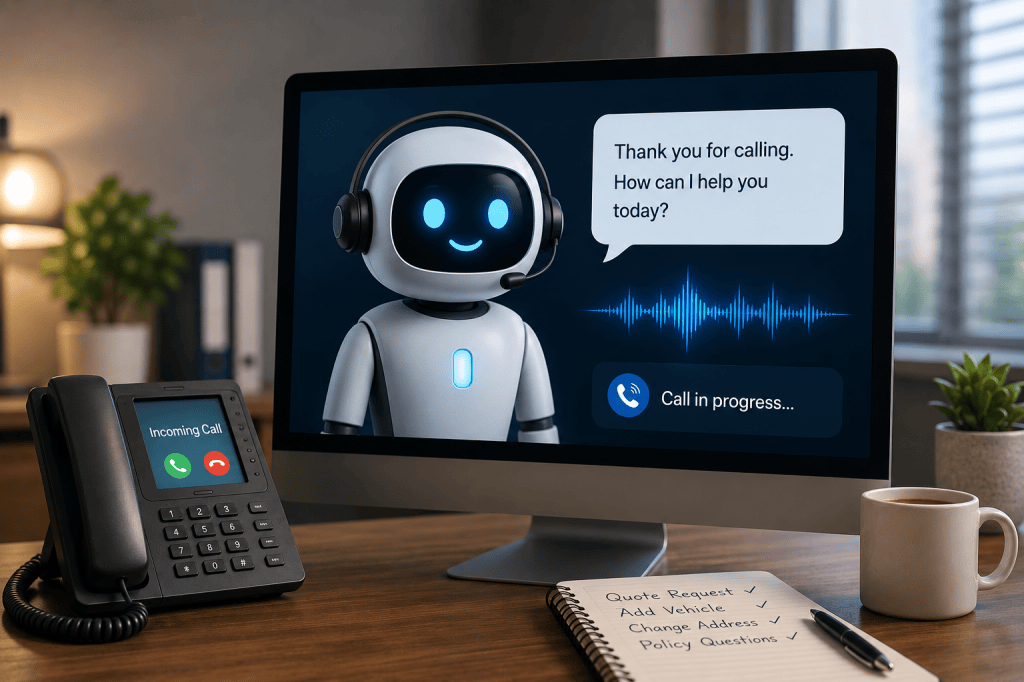
Voice AI is a fast-growing technology in customer service, but it’s important to understand what it does and what it doesn’t do. Today’s voice AI systems can typically answer calls, identify the reason for the call, gather information, answer common questions, and create detailed service requests for agency staff. A customer calling after hours to add a vehicle, request a certificate, or report a claim can receive immediate assistance rather than reaching voicemail. The technology can gather information, answer routine questions, and create a documented service request rather than simply taking a message
5. How Will You Measure Success?
Before implementing any new technology, agencies should define what success looks like.
Possible metrics include:
- Reduced voicemail volume
- Faster response times
- Increased portal adoption
- More completed service requests
- Improved customer satisfaction
- More appointments scheduled
- Additional sales opportunities captured after hours
- Increased quote requests from evenings and weekends
Without clear goals, it’s difficult to determine whether a new technology is delivering value.
It’s also important to recognize that the return on investment may not come solely from servicing existing customers. If after-hours tools help agencies capture more prospects, improve lead response times, or create opportunities to cross-sell products such as recreational vehicle, boat, umbrella, or specialty coverage, the business impact may extend well beyond customer service.
Both Convenience and Relationships Matter
The goal of after-hours service isn’t to make agencies available 24 hours a day. It’s to make it easier for customers to take the next step whenever they need help. The agencies seeing the greatest success aren’t replacing relationships with technology. They’re using technology to eliminate friction, improve responsiveness, and free their teams to focus on the conversations where independent agents deliver the most value. Consumers increasingly expect convenience, accessibility, and responsiveness. The opportunity for agencies is to deliver those benefits without sacrificing the expertise, advice, and personal relationships that continue to set the independent agency channel apart.

 PIA Connection Online
Leave a comment