
How agency leaders are building teams that can communicate, adapt, and perform when the pressure is on.
There’s an old definition of company culture: it’s what people do when no one is watching. In an insurance agency, it may also be what people do when things don’t go according to plan. How does an employee respond to an unhappy client? What happens when someone makes a mistake, a difficult renewal lands on the desk, or a new technology isn’t catching on? Can a manager have a tough conversation before a small problem becomes a bigger one? And how does the team respond when the way it has always done things needs to change?
Those moments reveal more about an agency’s culture than the mission statement. And what employees do in the real-world is when culture stops being an abstract idea and starts impacting client relationships, employee performance, and the overall business.
That matters in an industry where agency employees routinely deliver news clients don’t want to hear, navigate changing carrier appetites, learn new technology, and find solutions when the answer isn’t obvious. An agency can’t script its way through every situation. At some point, leaders have to trust employees to use their judgment, and employees have to trust that leaders will support them when they do.
Insurance agency owners know that a strong culture isn’t necessarily one where everyone agrees or where work is always fun, but where people understand what’s expected of them, feel comfortable speaking up, take responsibility for their work and trust the people around them enough to navigate problems and change together. Culture impacts how the agency performs.
“Good culture can be described in one simple word…harmony,” says Chaneé Boehnen, principal of Lundell Insurance. “Harmony means people talk, help one another and step in when needed. When it’s missing, everybody’s on pins and needles. Calls don’t get returned and things fall through the cracks. That’s when employees have to step in to fix problems.”
There’s Power in Making Mistakes
Strong cultures pair accountability with trust so that people aren’t afraid to make decisions, offer new approaches and make mistakes. “Our culture is high performing with a strong emphasis on collaboration and accountability,” says Shannon Wiegman, Senior Operations Manager, M3 Insurance. “But there’s an equal emphasis on empowerment. We’re not looking over shoulders. People are taking risks on a regular basis.”
That balance may be particularly important in insurance, where accountability matters but so does judgment. Employees can’t be expected to bring every coverage question, client issue or unusual situation to the agency owner. As they gain experience, they need the confidence to make decisions and to raise their hand quickly when they’re unsure or something has gone wrong.
That same philosophy works no matter the size of the agency. “We’ve adopted a phrase—launch, fail, learn, fix,” explains Mark Shoultz, Vice President at Priority Risk Management. “Let’s try something, and if it doesn’t work, let’s learn from it, let’s fix it and do better,” he says.
Shoultz recently found an unexpected example in his daughter’s middle-school math class. The teacher told parents at back-to-school night that he asked students to work through problems in class because he wanted to see them working through the problems, making mistakes and learning from them, versus simply delivering the right answers.
He brought the idea back to his agency. Rather than having an employee arrive with a problem and wait for him to solve it, he now asks them to explain the thinking and bring possible solutions. Sometimes he asks: if this were your business, what would you do? “Nine times out of 10, it’s either something that I agree with or something that’s better than I originally thought,” Shoultz says.
Give Employees Information and Tools
Thinking like owners can be difficult if employees are asked to take responsibility without understanding the business behind their decisions. “I once closely guarded information like agency revenue and financial performance. Today, I’m more comfortable sharing profit-and-loss statements with the team,” Shoultz says. Employees can see how the agency is performing and better understand the pressures and decisions that come with running the business. “There’s nothing to hide,” he explains.
Boehnen has seen the importance of that context when she’s talking with employees about issues such as loss ratios. An employee may see a conversation about the quality of a book of business as criticism. An agency owner sees how that business affects carrier relationships and the agency overall. “Sometimes accountability begins by connecting those dots,” she says.
Bringing it all together has become particularly important in today’s insurance marketplace. Employees may be the ones explaining a large premium increase, gathering additional underwriting information or telling a client that a carrier will no longer write a particular risk. Giving them more context about carrier relationships, loss experience and the economics of the agency helps them understand that these aren’t simply isolated transactions.
That doesn’t mean every agency has to open its books but does mean employees are more likely to make good decisions when they understand why something matters. The same ideas apply to the work itself. “Leaders at our agency regularly turn to employees to improve processes because they are the ones closest to them,” says Wiegman. “Employees are the ones doing the work and most equipped to help us solve problems.” That approach gives employees a stake in more than completing their own tasks. They’re helping determine how the work should be done.
In an agency, that front-line knowledge can be especially valuable. The person processing endorsements every day may know where a workflow consistently stalls. An account manager may see the same client frustration repeatedly. A producer may know where information is getting lost between prospecting and service. A resilient culture gives those employees a way to surface what they’re seeing and expects leaders to listen.
The Time for the Difficult Conversation is Now
Trust and accountability also depend on what happens when something isn’t working. For many leaders, difficult conversations are among the hardest parts of managing people. The temptation is to wait and that delay can mean a relatively small issue has become a much bigger one. “Sometimes thinking about the tough conversation is actually worse than having the tough conversation,” according to Boehnen. The strongest approach may begin long before the conversation becomes tough.
“If the only time a manager sits down with an employee is when something has gone wrong, every conversation carries extra weight,” says Wiegman. “Regular feedback gives leaders opportunities to recognize good work, learn more about their employees and address small issues before they grow,” she says. Then, when harder feedback is necessary, it should be specific: What happened? What was expected? Why did it matter? What needs to be different?
Regular communication also builds trust that’s created over time through consistent discussions, follow-through, and leaders explaining the reasons behind decisions. When employees are accustomed to that approach, a difficult conversation is less likely to feel as though it came out of nowhere.
After a client recently complained that an employee’s response to a workers’ compensation claim felt too transactional, Shoultz talked with the employee about what had happened. “The issue wasn’t that the necessary work hadn’t been done,” he explains. “In concentrating on the task, the employee had missed an opportunity to show empathy to a client dealing with an injured worker.” Feedback in that context isn’t simply about correcting behavior. It’s about helping an employee understand what the agency wants the client experience to be.
Make Growth Part of the Culture
The same idea of ownership can extend to employees’ careers. For example, M3 has formal tools to support professional growth, including individual development plans and career maps that help employees understand different roles and expectations. “Career growth belongs to the employee and the leader’s role is to help facilitate it,” explains Wiegman.
Good agencies ask employees things like:
∙ what do you want to do?
∙ what do you want to achieve?
∙ how can the agency help you do it?
These are important discussions for agencies competing for people who can build long-term insurance careers. Development doesn’t have to mean a promotion into management. It can mean building technical expertise, earning a designation, moving into a different line of business, becoming stronger with clients or taking greater responsibility within the agency.
“It’s important not to assume that the same measures motivate everyone, or that every goal produces the behavior the agency wants,” explains Boehnen. “We learned this first-hand after setting up production goals and seeing an employee write business that wasn’t necessarily good business. Loss ratios increased and we reconsidered the approach.”
Metrics do matter. Wiegman points out that agencies ultimately need to look at growth, results and employee engagement to determine whether what they’re doing is working. But a resilient culture connects those measurements to a larger purpose instead of allowing the number itself to become the objective.
“We track plenty of metrics, but two of the things we watch closely are attitude and effort,” says Shoultz. “I’m always looking for self-starters who want to build careers in insurance and contribute to the agency and their communities.”
Culture Beyond the Office
Remote work doesn’t necessarily mean a weaker connection to company culture. A 2026 study from the University of Colorado Boulder’s Leeds School of Business and the MD Anderson Leadership Institute looked at 7,704 employees at a large healthcare organization. Fully remote employees reported the highest levels of well-being, and researchers found little evidence that they felt less connected to coworkers or workplace culture.
But maintaining those connections may require more deliberate effort. In an agency where people once passed each other in the hallway, talked after a client meeting or asked a quick question in the office, many of those small interactions now need to be created intentionally.
“I try to find reasons to connect with members of my remote team who are spread across several locations,” says Wiegman. “Instead of emailing a question, I’ll sometimes call an employee on Teams and turn on the camera. It’s the closest thing to stopping by someone’s office.” She also holds regular team and individual meetings and makes a point of seeing team members in person several times a year.
The goal isn’t to recreate the office virtually or fill employees’ calendars with more meetings, but to make sure people remain connected to one another and to what’s happening across the agency. That can be particularly important in an insurance agency, where so much of the work is interconnected. A producer may depend on an account manager, who may depend on another team member to complete a policy change, gather information from a carrier or respond to a client request. When employees are spread across different locations, communication gaps can quickly become service gaps.
Technology makes remote work possible, but it doesn’t create culture. Remote employees need access to information, relationships with coworkers, regular feedback and opportunities to contribute. They also need the less formal things that are easy to overlook: a quick conversation, recognition for a job well done or simply knowing that someone notices when they’re doing well or struggling. For agency leaders, the challenge is keeping everyone connected to the agency.
A Culture That Can Handle Change
One of the biggest tests of agency culture today is simply the amount of change employees are being asked to absorb. Agencies are implementing new systems, experimenting with AI, changing workflows and responding to a difficult insurance marketplace, often at the same time.
Resilience doesn’t mean pretending that uncertainty doesn’t exist. Employees don’t necessarily expect agency leaders to know exactly where AI is headed, what the market will look like a year from now or which technology will ultimately become indispensable. They do need clarity about what the agency is doing now, why it’s doing it and what is expected of them.
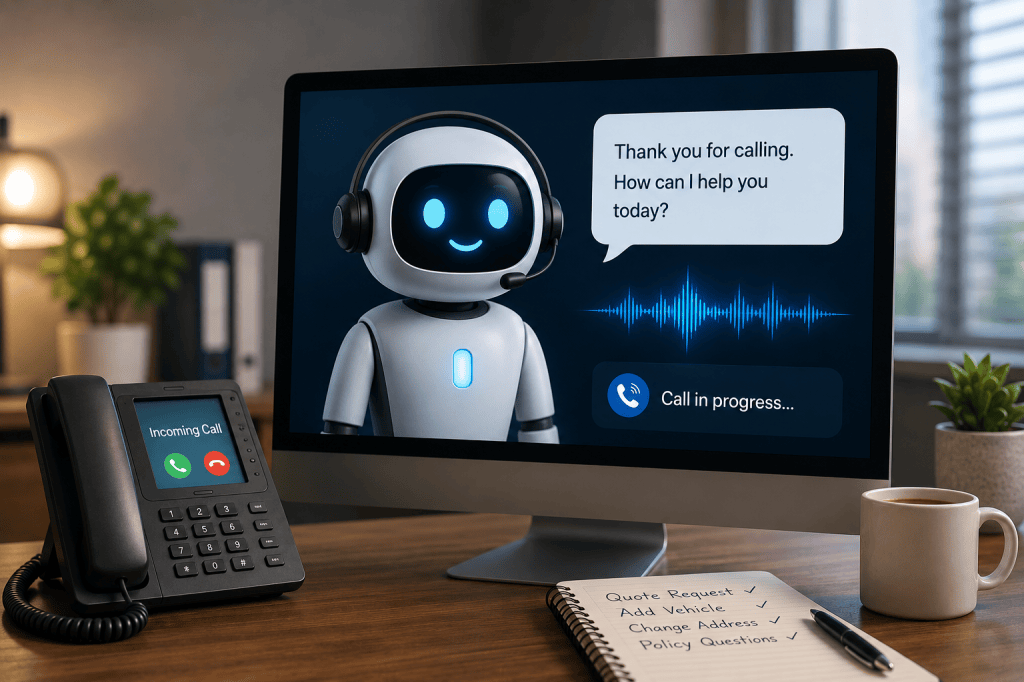
“We have experienced a lot of change in a short amount of time. We changed phone systems, added new technology platforms, began using AI tools and introduced a virtual assistant,” Boehnen says. “Eventually I realized I needed to slow things down. It’s not fair to ask the team to adopt four new platforms in two months.”
Technology can save significant amounts of time, but only when people understand how to use it and incorporate it into their work. That makes implementation as much a leadership and culture challenge as a technology one.
Boehnen’s agency is now more deliberate about learning and implementing one tool before moving aggressively into the next. It’s an important lesson because what looks like resistance to change may sometimes simply be overload. “You have to lead by example,” she says. “I can’t expect somebody to do something or use something that I myself don’t do.”
There is no single formula for a strong agency culture. A five-person family agency isn’t going to approach it exactly like a 500-person organization. A fully in-office agency will operate differently from one with employees spread across multiple locations. Some agencies have formal career-development programs and sophisticated employee tools; others rely on conversations between an owner and a small team.
But the underlying principles aren’t different. Strong cultures combine expectations with trust. People understand not only what they’re supposed to do, but why it matters. Feedback is part of the normal rhythm of work rather than something saved for when there’s a problem. Employees have opportunities to exercise judgment, improve the way work gets done and determine where they want their careers to go. And leaders pay attention to the pace of change rather than simply expecting people to keep up.
The value of a strong culture is that when a difficult market issue, employee departure, new technology or unexpected business problem arrives, the agency isn’t starting from scratch trying to figure out how its people will work through it together.
SIDEBAR: BUILDING A MORE RESILIENT CULTURE
Practical ideas agency leaders can put to work:
- Make feedback routine—not something employees hear only when something is wrong.
- Ask employees to bring possible solutions, not just problems.
- Explain the business reason behind decisions.
- Give people room to make mistakes, learn and try again.
- Ask employees where they want their careers to go—and help them get there.
- Be intentional about connecting with remote employees.
- Introduce change at a pace people can absorb.
- Watch the business results. Culture isn’t separate from performance.
- Address problems early; don’t allow difficult conversations to become surprises.
- Leaders have to model the behaviors they expect from everyone else.




Leave a Reply